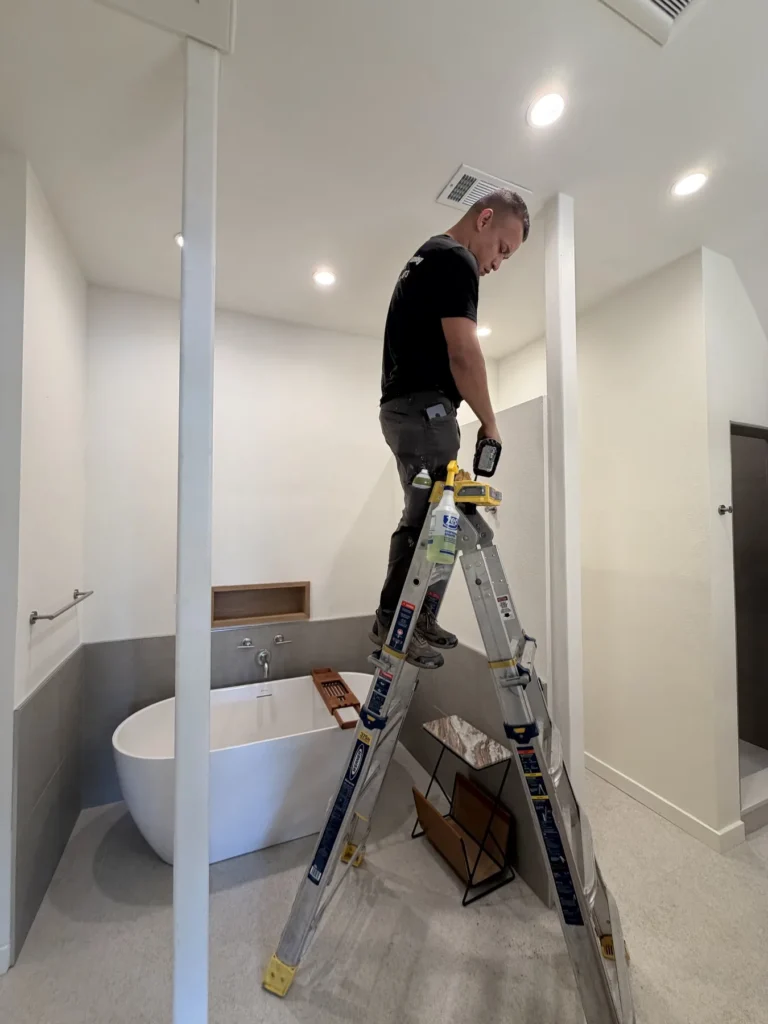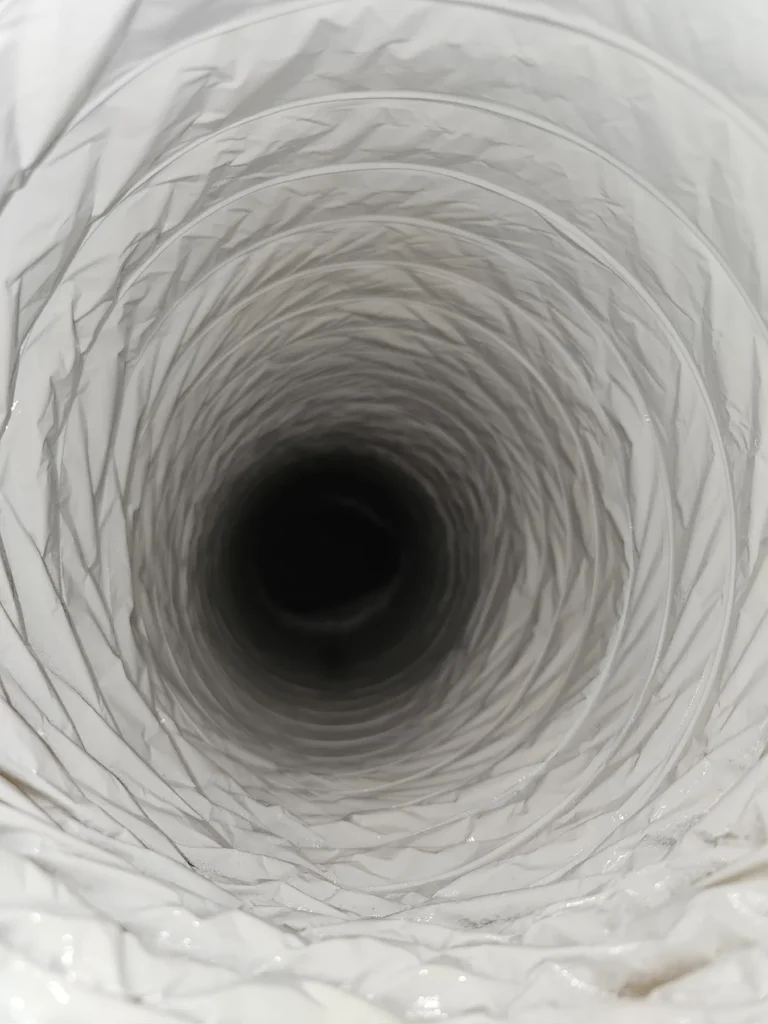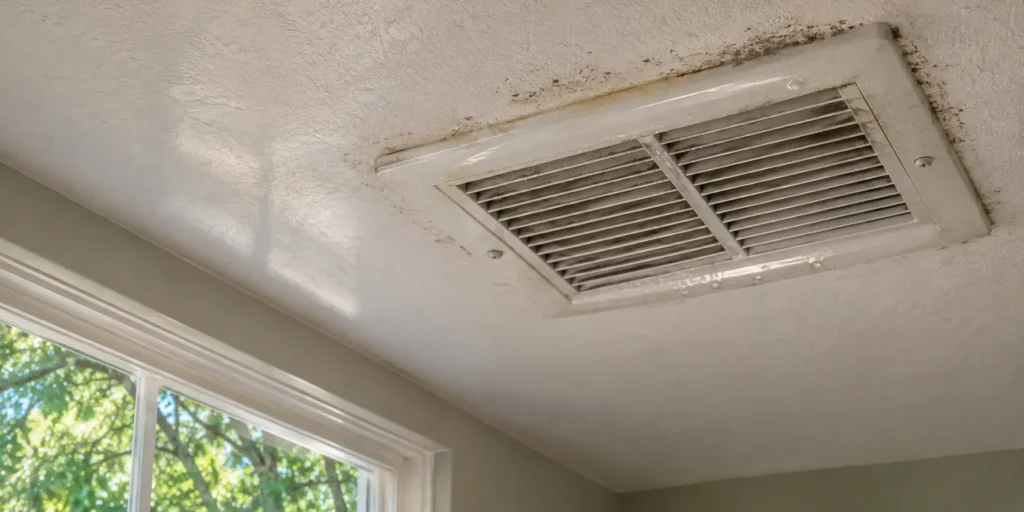
A kitchen remodel, new flooring, or a garage conversion can fill a house with fine dust, and the HVAC system is very good at moving that dust around. The best time to deal with construction dust in the ductwork is before it gets there. This guide is for Austin homeowners planning or in the middle of a project: what to set up before work starts, how to run (or not run) the system during dusty phases, what to ask your contractor, and how to decide afterward whether the ducts need cleaning at all.
Key Takeaways
- Return grilles in or near the work area are the main way construction dust enters the system, because they pull air toward the air handler.
- A covered vent and a fresh filter at the end of the project prevent many post-construction cleaning jobs.
- If the air handler sits in a garage, attic, or closet that is part of the work zone, it needs its own protection plan.
- Homes built before 1978 may contain lead-based paint, which changes how renovation dust must be handled.
Drywall Dust Has a Way of Reaching Everywhere
Construction dust is finer than everyday household dust. Drywall sanding produces a powder that hangs in the air for a long time. Sawing and routing produce sawdust, demolition releases plaster and old insulation, and floor sanding creates a steady cloud of fine wood dust.
Air moves through a house along the paths the HVAC system creates. When the blower runs, return grilles pull air from the rooms toward the air handler, and anything airborne travels with it. If a return grille sits in or near the work area, it acts like a vacuum for construction dust. Supply registers that are left open can also collect settling debris, especially floor registers near sanding or cutting.
| Project Type | Dust or Debris Produced | HVAC Concern |
|---|---|---|
| Drywall installation or patching | Very fine gypsum dust from sanding | Easily drawn into returns; loads filters quickly |
| Flooring removal or sanding | Wood dust, grout and adhesive debris | Floor registers collect falling debris |
| Demolition and wall removal | Plaster, old insulation, mixed debris | Larger debris can fall into open registers and boots |
| Garage conversion or additions | Mixed construction dust near the equipment | Air handler or ductwork may sit inside the work zone |
| Attic work or insulation changes | Insulation fibers and attic dust | Ducts and the air handler may be exposed or disturbed |
Before Work Starts: Set Up the System
Ten minutes of planning before demolition can save a full cleaning later. Talk with your contractor about the HVAC system the same way you would talk about protecting floors.
- Find every register and return in the work area. Returns matter most. Note any in adjacent rooms or hallways too.
- Agree on how they will be covered. Supply registers and returns in the work zone can be sealed with plastic and tape. Make sure the cover is removed or vented if the system will run, so airflow is not choked.
- Locate the air handler. In many Austin homes it sits in the attic, a hall closet or the garage. If the project touches that space, it needs a plan of its own.
- Start with a fresh filter and buy a few spares. Construction phases can load a filter far faster than normal living.
- Ask about dust containment. Plastic barriers, zippered doors and negative-air machines in the work area all reduce how much dust reaches the rest of the house.
If your home was built before 1978, ask your contractor about lead-safe practices. Disturbing lead-based paint creates hazardous dust, and the EPA’s Renovation, Repair and Painting program requires firms working on pre-1978 homes to follow lead-safe work practices. That is a separate issue from ordinary construction dust and should be handled by the renovation contractor, not a duct cleaner.
During the Project: Should the HVAC Run?
When you can, avoid running the system during the dustiest phases, such as sanding, cutting, and demolition, if the house is occupied and the weather makes that impractical, keep returns in the work area sealed, check the filter every few days, and replace it as soon as it looks loaded.
A few practical points help during the project:
- A clogged filter restricts airflow and can let dust past its edges. During construction, change it based on what you see, not on the calendar.
- Do not use the HVAC system to “clear the air” after sanding. Let dust settle, clean it up, and then run the system.
- Cover floor registers firmly. Foot traffic and dropped debris can push material straight into the boot.
- If the contractor is using the garage as a workshop and the air handler is there, ask whether it can be shut off and protected while cutting is happening.
After the Final Cleanup: Decide What the System Needs
Once the dusty work is done and the house has had its final construction clean, look at the system before booking anything.
- Replace the filter. The construction filter has done its job. Put in a fresh one.
- Remove the register covers in the work area and look inside with a flashlight. Drywall dust, sawdust, or debris in the boot is a useful sign to note.
- Check the return grille and the area just behind it. Returns in or near the work area are where dust is most likely to have entered.
- Run the system and watch. Dust puffing from supply registers when the blower starts is a clearer sign than dust on furniture.
If the vents were covered, the system was off during dusty work, and nothing shows up in the registers, cleaning may not be needed. If the answers are mixed, an air duct inspection can check the accessible ductwork and tell you whether cleaning is worth it. Our earlier article on whether a new or remodeled home needs air duct cleaning covers the questions to ask a builder before moving into a brand-new house.
| What You Find After the Project | Likely Next Step |
|---|---|
| Vents were covered, system was off, registers look clean | Replace the filter; cleaning is probably not needed |
| System ran during sanding, light dust near registers | Inspection to see how far the dust traveled |
| Visible debris in boots or dust blowing from registers | Post-construction cleaning of the affected runs |
| Ducts were moved, cut, or disconnected during the work | Inspection for disconnections and leaks, plus repair or sealing |
Just Finished a Project and Unsure About the Ducts?
Tell us what was done, which rooms were involved, whether the system ran during the dusty work, and what you see in the registers. We will help you decide between replacing the filter, an inspection, or post-construction cleaning of the affected runs.
What Post-Construction Duct Cleaning Covers
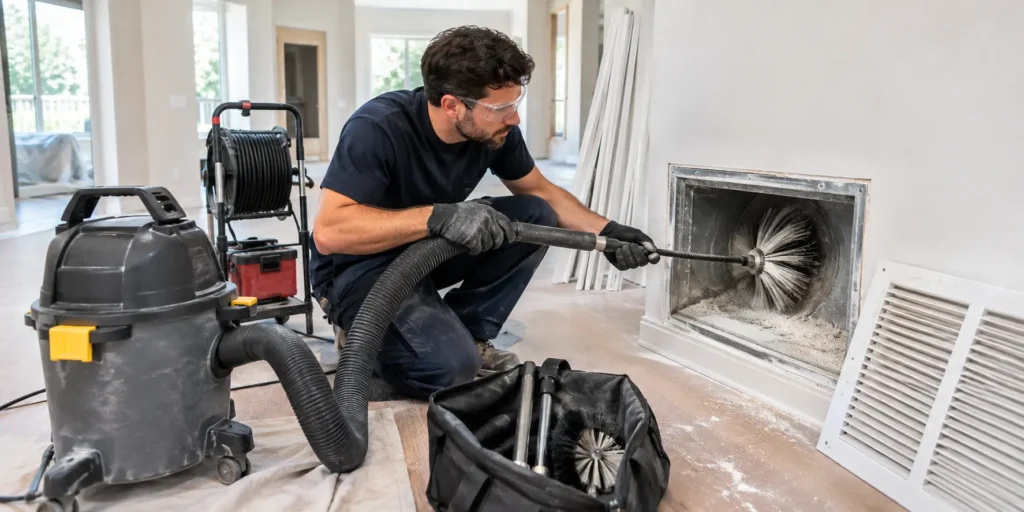
When cleaning is the right call, it should focus on the parts of the system the project affected. Our post-construction air duct cleaning covers the supply and return runs serving the work area, and the rest of the system where needed, cleaned under negative pressure so debris is drawn out to the collection unit rather than blown into the house. Registers are removed and cleaned, boots are cleared, and the construction-loaded filter is replaced at the end of the visit.
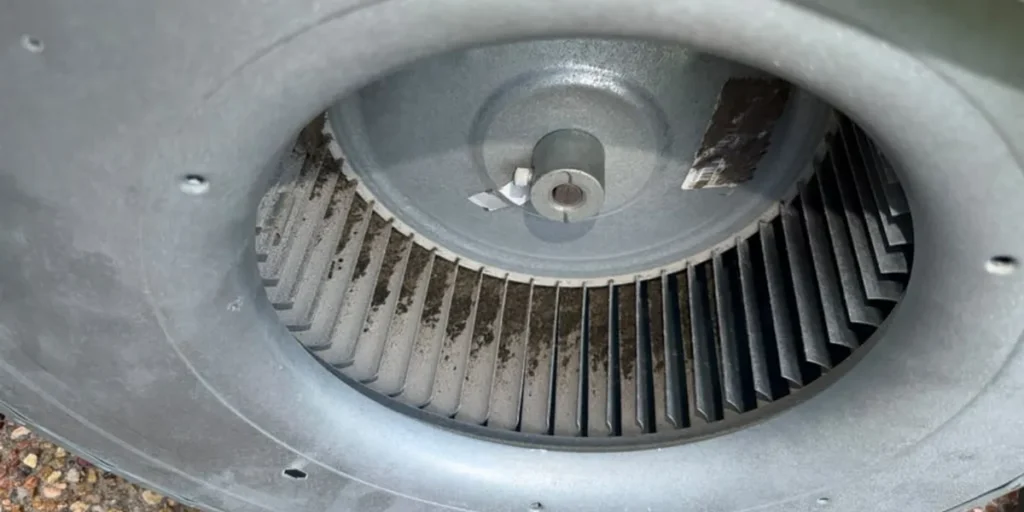
Construction dust that reaches the air handler can also coat the blower wheel. If the blower was exposed, ask whether blower cleaning should be part of the scope. Our blower wheel deep cleaning project shows what buildup on that component looks like. For a broader view of what a cleaning visit includes, see what professional air duct cleaning includes.
When Cleaning Cannot Fix the Problem
Construction can damage ductwork as well as dirty it. Remodels often involve moving registers, cutting into ceilings, or working around attic runs. Flex duct can be crushed by someone kneeling on it, boots can be pulled loose, and new runs can be added without proper sealing.
If a room near the project stopped cooling well after the work, cleaning will not solve it. Air duct repair and sealing reconnects loose runs and seals leaking joints. If a remodel changed the layout, adding or rerouting runs may be part of air duct installation work rather than repair.
New Construction and Commercial Build-Outs
In fast-growing areas around Austin, many homes are brand new. A new build can still have construction debris in the ducts, particularly if the system ran before the final cleanup. Communities like Kyle, with many recently built neighborhoods, see this question often.
Commercial tenant finish-outs follow the same logic at a larger scale, with more systems, zones and scheduling constraints. Our commercial services page explains how projects after renovation or before a new tenant are planned.