A postcard, a roadside sign, or a social media ad promises whole-house air duct cleaning for $99. Is it a real deal or the opening move in a bait-and-switch? The price alone does not tell you. Some low-price offers are honest, limited-scope services; others exist only to get a salesperson through the door. This guide explains how the bait-and-switch pattern works, the red flags to watch for before and during the visit, and how to read any low-price offer, including ours, so you know exactly what you are paying for.
Key Takeaways
- The problem is not a low price. It is a low price with a vague scope that grows once the technician is inside.
- “Whole house” and “unlimited vents” mean little without the number of HVAC systems and the components covered.
- Sudden on-site findings of mold, followed by pressure to buy treatment immediately, are a classic upsell pattern.
- You can always say no, ask for photos, and get a written scope and total before any additional work begins.
How the $99 Bait-and-Switch Usually Works
Better Business Bureau offices around the country have warned about the same pattern for years. A very low price is advertised through mailers, signs, or online ads. Once the crew is inside, the scope shrinks, or the price grows. Several local BBB warnings describe “tests” or inspections on site that conveniently find mold or heavy contamination, followed by expensive add-ons.
The sequence often looks like this:
- The hook: a price far below what a full system cleaning normally costs, with words like “whole house,” “unlimited,” or “complete.”
- The shrink: on arrival, the $99 turns out to cover only a few vents, only supply ducts, or only a quick pass with a shop vacuum.
- The scare: a technician shows you dark material or “test results” and says the ducts need sanitizing, mold treatment, or replacement right away.
- The pressure: the new price is presented as a same-day special, and you are asked to decide before the crew leaves.
Not every company that offers a low price behaves this way. But when the scope is vague in the ad and specific only on the invoice, that is the warning sign.
Red Flags Before and During the Visit
| Red Flag | Why It Matters | What to Ask |
|---|---|---|
| “Whole house” or “unlimited vents” with no system count | A home with two systems is two jobs; the ad hides the difference | How many HVAC systems does this price cover? |
| No mention of returns or components | Supply-only cleaning, or no blower or plenum work, is a much smaller job | Are supply and return ducts both included? Which components? |
| Mold “found” within minutes, with no photos | The EPA notes only lab analysis can confirm mold | Can I see photos of where it is and what you think caused it? |
| Chemical treatment offered before cleaning | Treating dirty ducts is not effective | What product is it, and why does my system need it? |
| Health promises | The EPA calls sweeping health claims for duct cleaning unsubstantiated | What specific problem in my system will this address? |
| “Today only” pricing for added work | Pressure prevents comparison and second opinions | Can you put this in writing so I can decide later? |
Why a Real Cleaning Rarely Costs Just $99
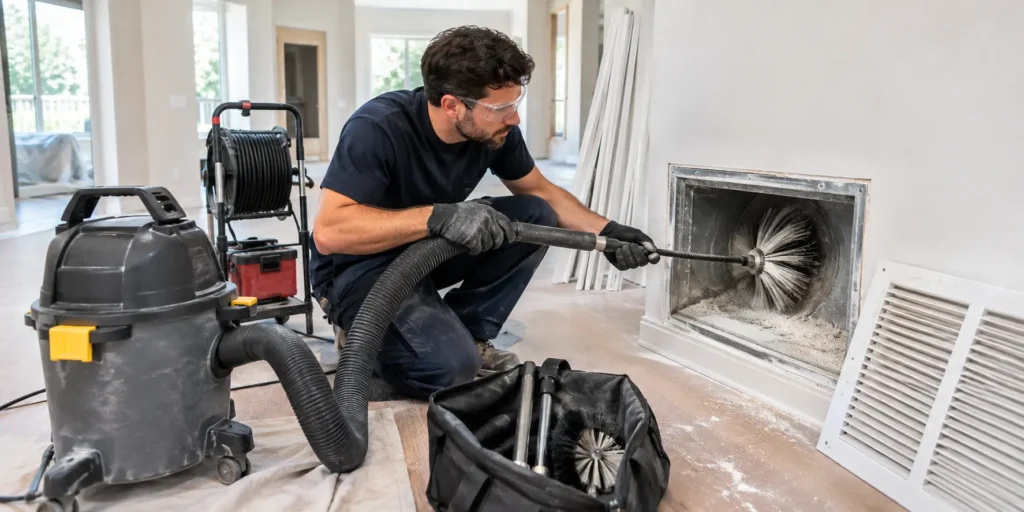
A thorough cleaning of a full HVAC system involves more time, equipment and access than a $99 price can usually cover. Cleaning the supply and return ductwork through to the main unit, working under negative pressure, opening registers and reaching attic runs all take time. Add a second system, rotary brushing, the blower or the plenum, and the scope grows quickly.
That does not make a $99 offer dishonest. It means a $99 offer is almost always a defined, limited scope. The honest version tells you that limit up front. Our guide to how much air duct cleaning costs in Austin explains what drives the price of a full estimate, including the number of systems, access and contamination.
What a Legitimate Low-Price Offer Looks Like
In fairness, we should be transparent about our own pricing. Austin Air Duct Cleaning currently lists an Air Duct Cleaning & Furnace Check-Up offer at $99 on our offers page. Here is exactly what that offer is and is not:
- It is listed for one unit. If your home has more than one system, tell us, because each system is its own scope.
- It pairs an air duct cleaning with a furnace check-up.
- Our basic air duct cleaning is vacuum cleaning of the individual ducts and returns to remove accumulated dust and debris.
- Rotary-brush cleaning and other deeper work are a separate scope and quoted separately.
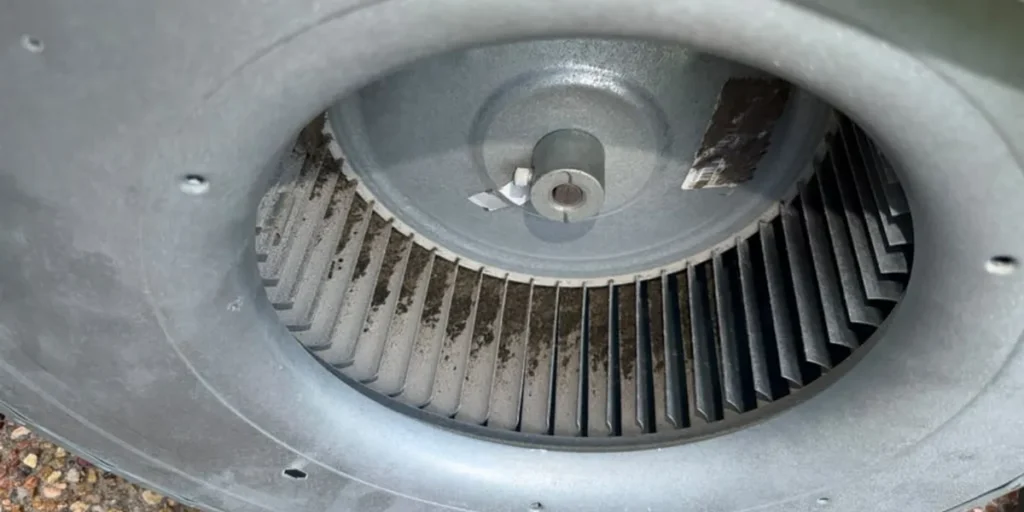
- Plenum, blower and furnace cleaning are not part of every quote, so ask which are included in yours.
- The current price and scope are confirmed with you when you inquire, before anything is scheduled.
That is the standard to hold any low-price offer to, ours included: a named scope, a stated limit, and a clear explanation of what costs extra before the visit, not during it.
Got a Low-Price Quote and Not Sure What It Covers?
If an offer looks good but the scope is vague, ask for it in writing before you book. You are also welcome to tell us what you have been quoted and what your system looks like. We will explain what a cleaning of your system would actually involve, and whether an inspection makes more sense first.
Questions to Ask Before You Book Any Duct Cleaning
The EPA suggests getting estimates from more than one service provider and not hiring anyone who makes sweeping health claims. Its consumer guide, Should You Have the Air Ducts in Your Home Cleaned?, is worth reading before you book. Whatever price you are offered, these questions keep the conversation honest:
- How many HVAC systems does the price include?
- Are both supply and return ducts cleaned, all the way to the main unit?
- Which components are included: registers, plenum, blower, coil?
- How is debris collected so it is not blown into the house?
- What would cost extra, and will you ask before doing it?
- Will I see photos or a walk-through of what was found and what was done?
Our article on what professional air duct cleaning includes covers scope questions in more depth.
When the Technician Says “You Have Mold”
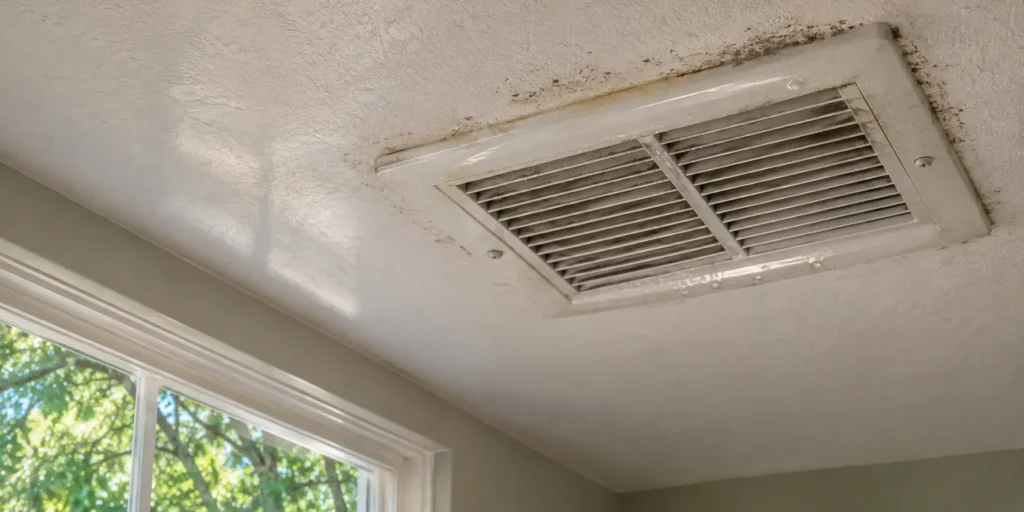
A claim of mold should come with evidence, a likely moisture source and a clear plan, not a same-day ultimatum. Dark material on a register or inside a duct can be dust that stuck to condensation. The EPA notes that only lab analysis can confirm whether a substance is mold, and that the moisture source must be fixed or growth is likely to return.
If you are shown something concerning, ask for photos and for the findings in writing, and take time to decide. A legitimate company will still be there tomorrow. Our article on air duct cleaning and mold explains what should happen when growth is actually confirmed.
The same applies to sanitizing and disinfection. It is a treatment applied after cleaning when the condition of the system calls for it, not a standard add-on for every home. You should be told which product will be used, and be able to see its label, before agreeing.
Low-Price Offer vs. Full Estimate
| Situation | Better Fit | Why |
|---|---|---|
| One system, light dust, no specific concern | A clearly scoped promotional offer may fit | The job matches a defined, limited scope |
| Two or more systems | A custom estimate | Each system is its own scope |
| Heavy debris, pests, or remodeling dust | Inspection, then a custom estimate | The work may involve deeper cleaning or other components |
| Weak airflow, hot rooms, or visible duct damage | An inspection first | Repair or sealing may matter more than cleaning |
Sometimes the most useful answer is that the ducts do not need cleaning at all. Our article asking whether air duct cleaning is a waste of money explains when it is and is not worth paying for. If you are unsure, an air duct inspection can answer that before you spend anything on cleaning.
If You Feel Pressured During the Visit
You are allowed to stop. If the scope or price changes after the crew arrives, you can ask them to complete only what was agreed, or to leave without starting. Get any new proposal in writing and compare it with at least one other provider. If you believe you were misled, the Texas Attorney General’s consumer protection division and your local Better Business Bureau both accept complaints.