Commercial · Austin area, TX

Commercial Dryer Exhaust Cleaning: Lint Chamber and Rooftop Fan

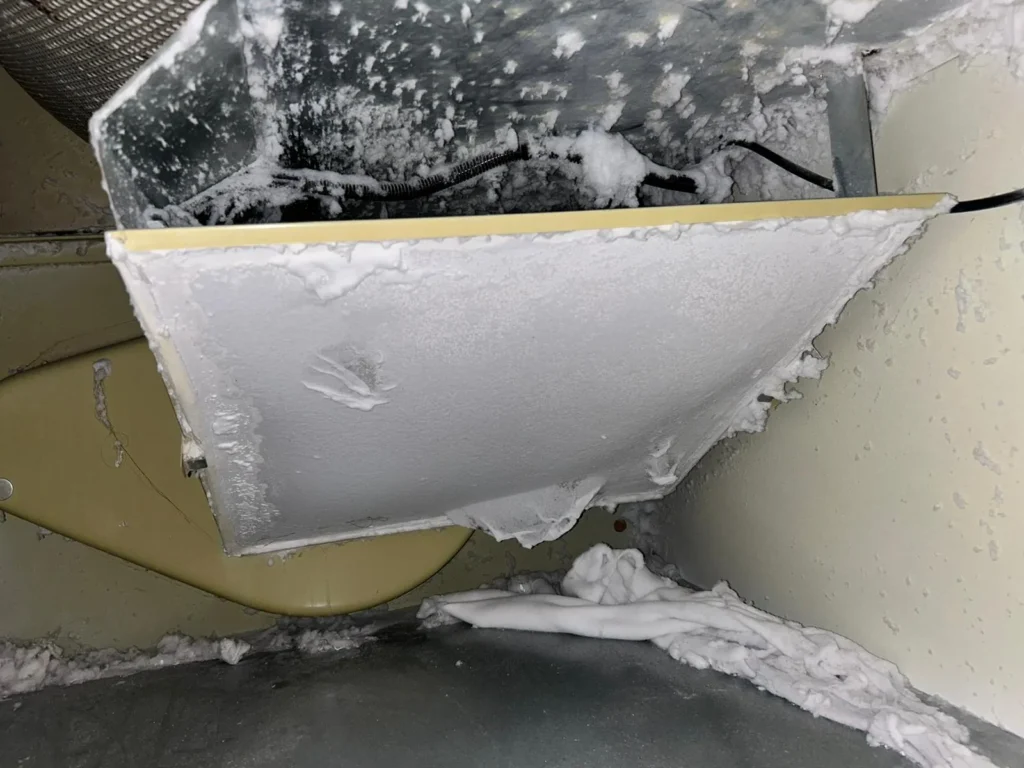
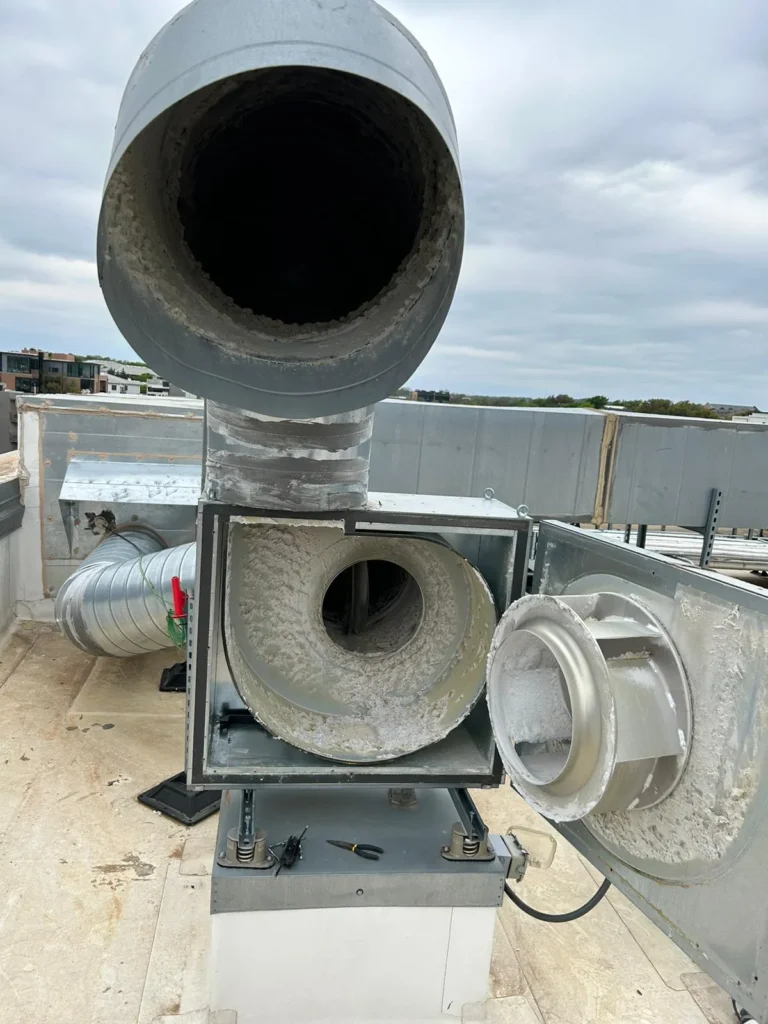
This commercial dryer exhaust runs through a lint chamber and up to an exhaust fan on the roof. Lint had built up on the chamber panels and inside the rooftop fan housing.
Property type
Commercial
Property
Commercial building
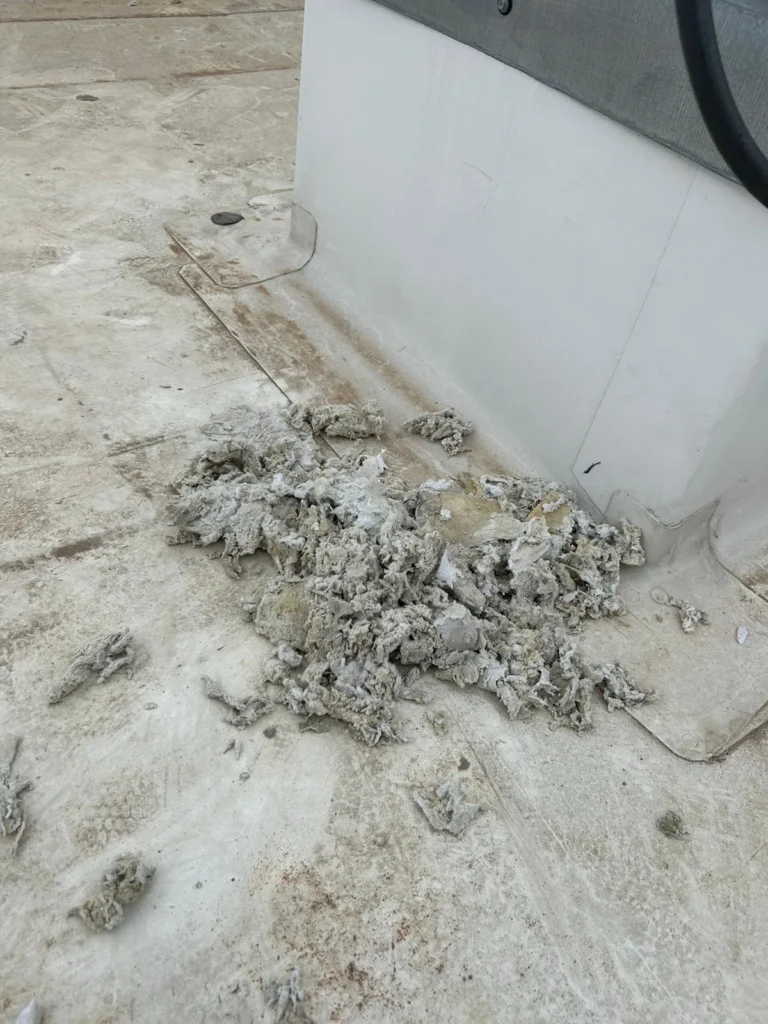
Rooftop dryer exhaust fan with lint inside the housing before cleaning
The request

What the business needed

Commercial dryers move a lot of lint. When it collects in the exhaust fan and duct, airflow drops, drying slows down and the build-up becomes a fire risk. The business needed the whole exhaust path cleaned, including the rooftop fan.

Work performed

  1. 01Open the system. Open the lint chamber and the rooftop fan housing and photograph the build-up in both.
  2. 02Clear the lint. Remove the lint from the chamber panels, the duct and the rooftop fan, collecting it as it comes out.
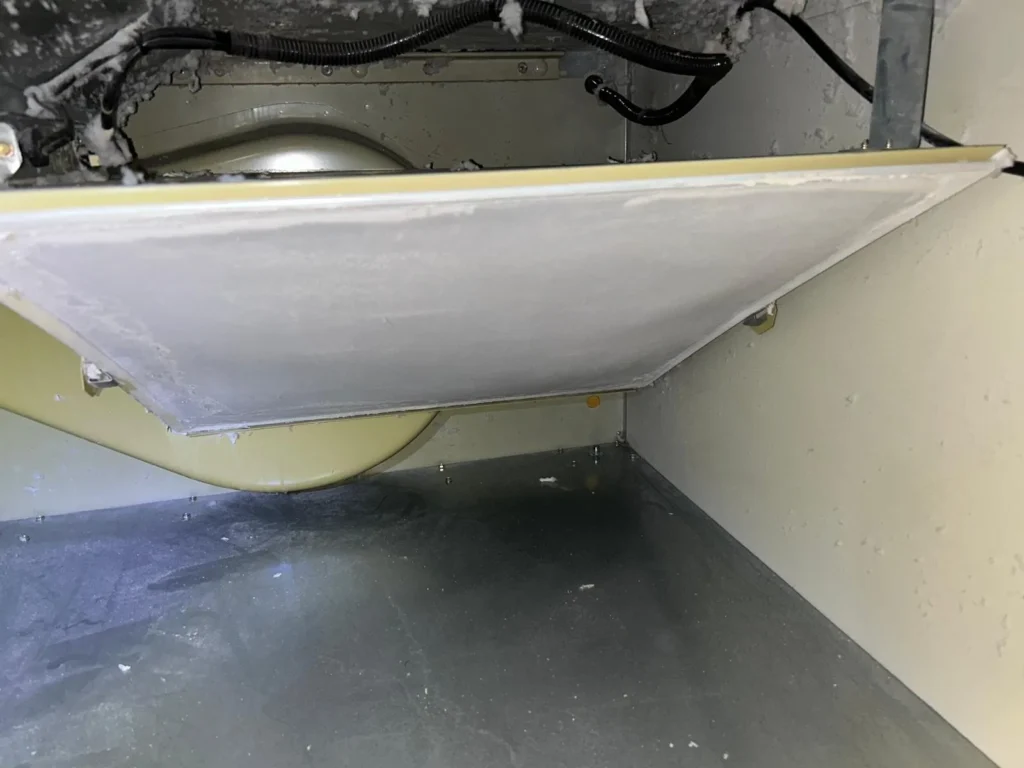
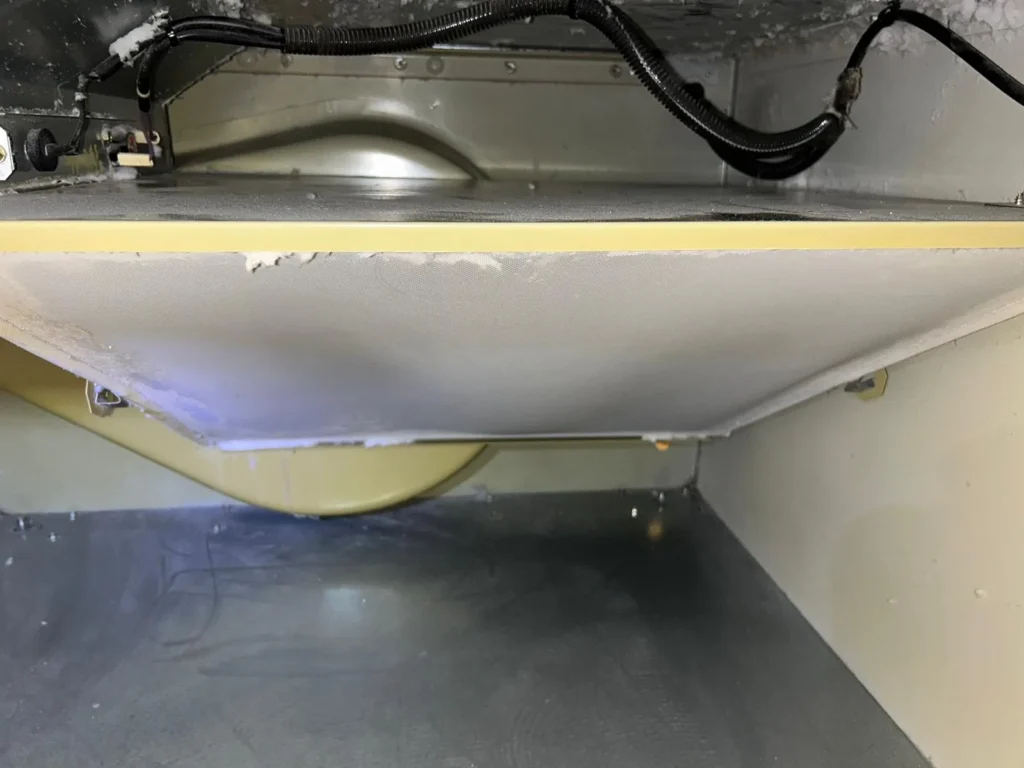
  3. 03Close up and check. Reassemble the chamber and the fan housing, confirm the exhaust is moving air freely and photograph the clean chamber.
Before and after

The same spot, before and after

Project details

A closer look at the job

What we found

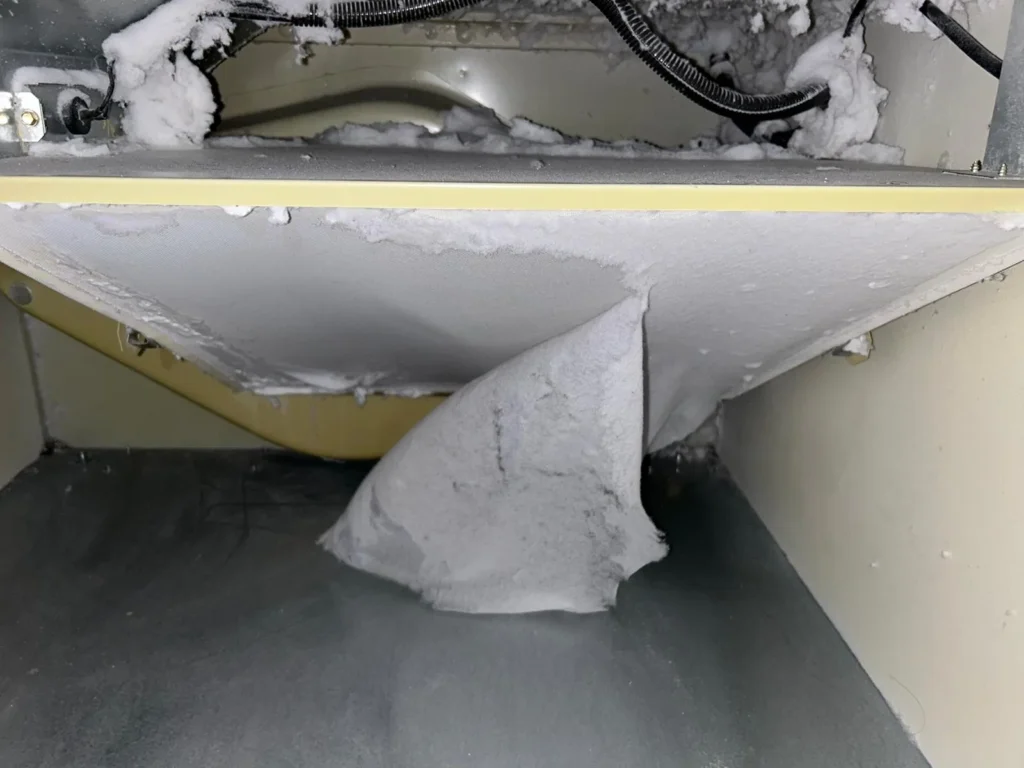
The photos show lint hanging from the panels of the lint chamber and built up along the chamber walls, a rooftop exhaust fan with lint inside its housing, and lint that had collected on the surface around the exhaust. The build-up was spread along the whole exhaust path, not in one spot.

How we approached it

A commercial dryer exhaust has to be treated as one path, from the dryers to the roof. We opened the lint chamber and the rooftop fan housing, photographed the build-up and then cleared the lint from the chamber panels, the duct and the fan. The lint was collected as it came out rather than left on the roof. After the chamber and the housing were closed up, we checked that the exhaust was moving air freely and photographed the clean chamber.

Signs to watch for

  • Loads taking longer to dry than they used to
  • Lint visible around the rooftop exhaust or on the roof
  • The laundry area feeling hotter or more humid than usual
  • Dryers shutting off on high-temperature limits
  • No cleaning schedule for the exhaust system

Why it matters

Commercial dryers run for long hours and produce far more lint than a household dryer. When lint builds up in the chamber, the duct or the rooftop fan, airflow drops, drying cycles get longer and the equipment runs hotter. Lint is highly flammable, so a clogged exhaust is also a fire risk. Regular cleaning keeps the dryers efficient and the exhaust path safe.

Outcome

How it finished

The lint chamber, the duct and the rooftop fan were cleared of lint, leaving the exhaust path open from the dryers to the roof.

Have a similar property?

Tell us about it and we’ll contact you to discuss your request. It does not confirm an appointment.

Questions

About this kind of job

Straight answers to the questions we hear most about this kind of work.

How often should a commercial dryer exhaust be cleaned?

It depends on how many dryers share the exhaust and how many hours they run. Busy laundries need much more frequent cleaning than a home. We can suggest a schedule after seeing the build-up.

Do you clean the rooftop fan as well as the duct?

Yes. Lint collects in the fan housing too, so the exhaust is cleaned from the dryers all the way to the roof.

Can the dryers keep running during the cleaning?

The dryers connected to the exhaust need to be off while it is being cleaned. We plan the timing with you to keep the downtime short.

What happens to the lint you remove?

It is collected and bagged as it comes out, including what has built up on the roof around the exhaust.

Get in touch

Have a similar property?

Share a few details about the property and we’ll contact you to discuss your request. It does not confirm an appointment.

Call or text
(512) 354-2780
Hours
Open 24 hours, 7 days a week
We’ll contact you to discuss your request.