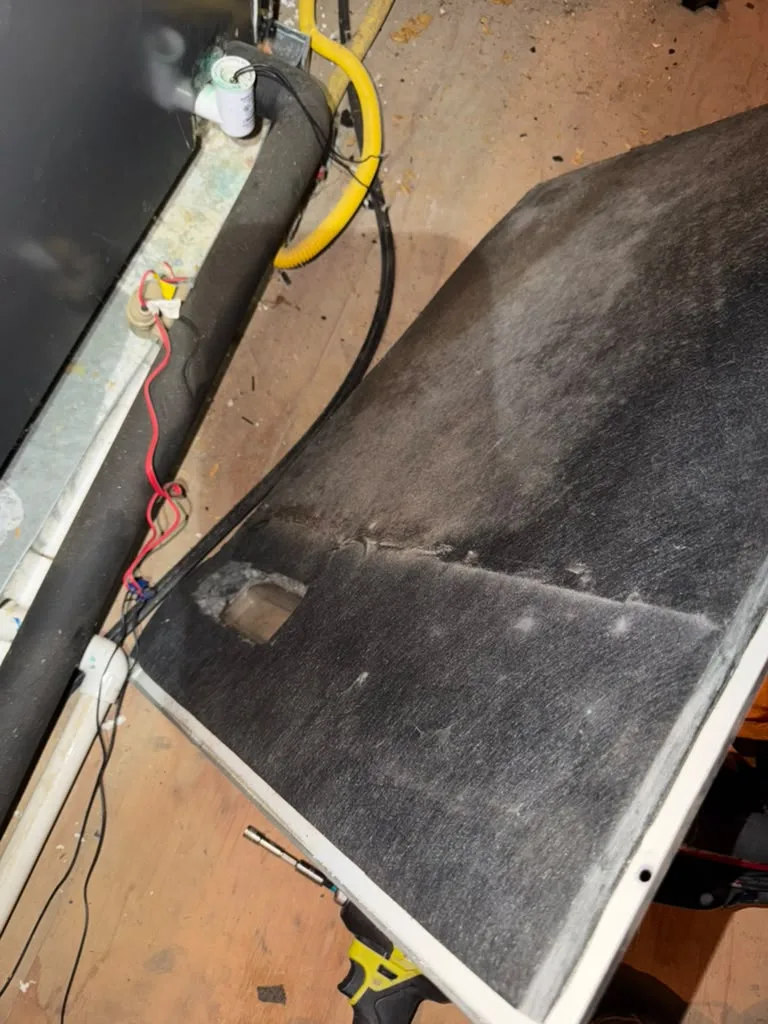
What you can do yourself
Some HVAC upkeep is simple and safe for homeowners:
- Check and replace the filter on schedule, or clean it if it is a washable type.
- Keep supply registers and return grilles clear of furniture and rugs.
- Keep the outdoor unit clear of leaves, grass clippings and overgrown plants.
- Note unusual noises, smells or changes in airflow and report them.
Beyond these tasks, the risks rise quickly.
Why repairs need a professional
Electrical and gas hazards
HVAC equipment carries line voltage, and capacitors can hold a charge after the power is switched off. Gas furnaces add combustion and venting safety. Working on these parts without training risks shock, fire and carbon monoxide problems.
Refrigerant
Air conditioning systems contain refrigerant under pressure. Handling it requires training and certification, and a leak needs to be found and repaired, not simply topped up.
Licensing in Texas
In Texas, air conditioning and refrigeration contractors are licensed by the Texas Department of Licensing and Regulation (TDLR). Ask for the license number when you hire someone for repair or installation work.
Warranty considerations
Many equipment warranties require installation and repairs by a qualified professional, and some ask for proof of regular maintenance. Read your warranty before attempting any repair yourself, and keep records of service visits.
Musty smells and moisture
A musty smell when the system runs can point to moisture somewhere in the equipment or ductwork. Have the source found before choosing a treatment. Our article on air duct cleaning and mold explains how that is assessed, and the EPA’s guide to mold and moisture covers the basics.
Services we provide
Austin Air Duct Cleaning works on the air-delivery side of the system: air duct cleaning, dryer vent cleaning and UV lights and air filters. For equipment repairs, refrigerant work or a new system, use a licensed HVAC contractor.