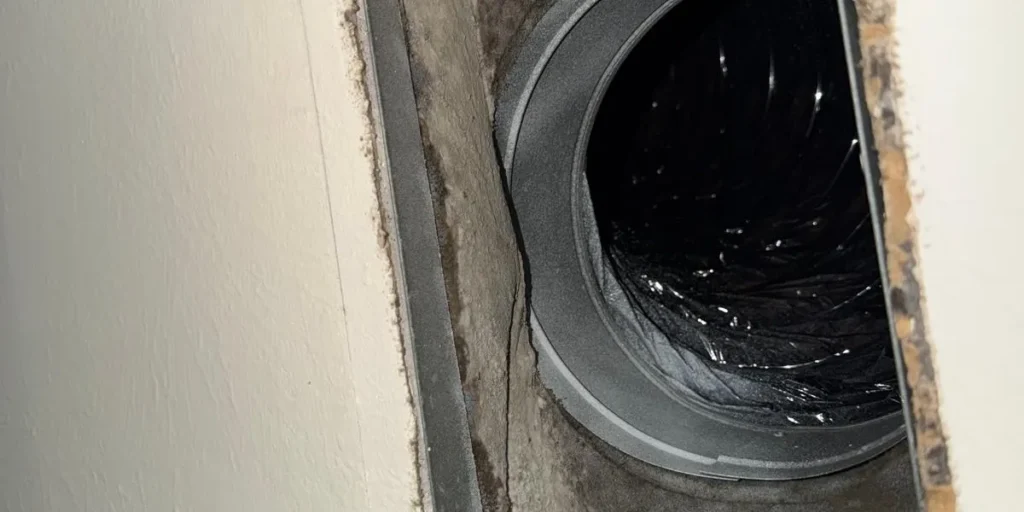
What you can safely do
- Change or clean the filter on schedule. ENERGY STAR recommends checking it monthly.
- Clean register covers and grilles. Turn the system off, remove the covers, wash them with warm soapy water and dry them before refitting.
- Vacuum the duct opening as far as your vacuum hose reaches comfortably.
- Keep registers and returns clear of furniture, rugs and stored items.
Where DIY stops working
No negative pressure
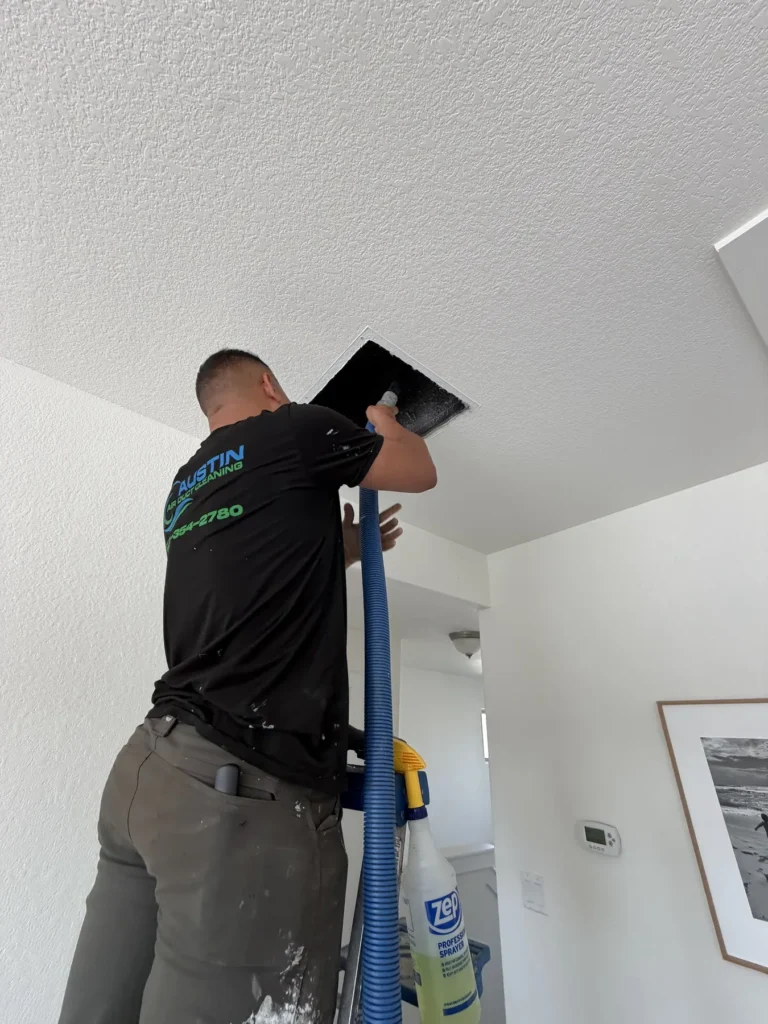
Professional cleaning connects a powerful vacuum collection system to the ductwork so the whole run is under negative pressure. When debris is loosened, it is pulled out. A household vacuum cannot do that, so brushing deeper inside can simply push dust further along or into the house.
Flexible duct tears easily
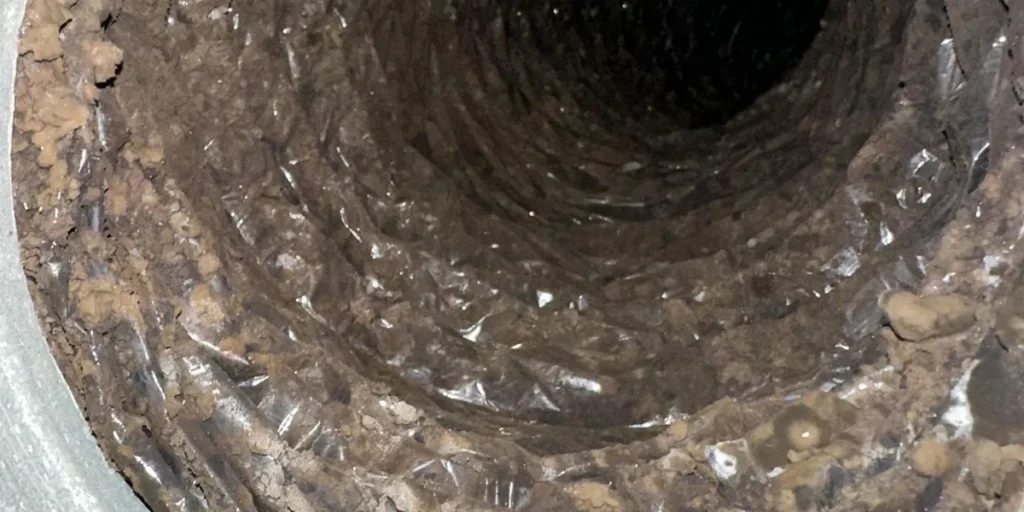
Many Austin homes have flexible duct runs in the attic. Pushing a brush or hose into them can tear the inner liner or pull connections loose.
Chemicals
Do not spray household cleaners or fragrances into ductwork. The EPA advises understanding any chemical treatment before it is used, and only after the system has been properly cleaned.
When to call a professional
- Dust or debris blows out when the system starts.
- You see signs of pests or suspected mold.
- You have just finished a renovation.
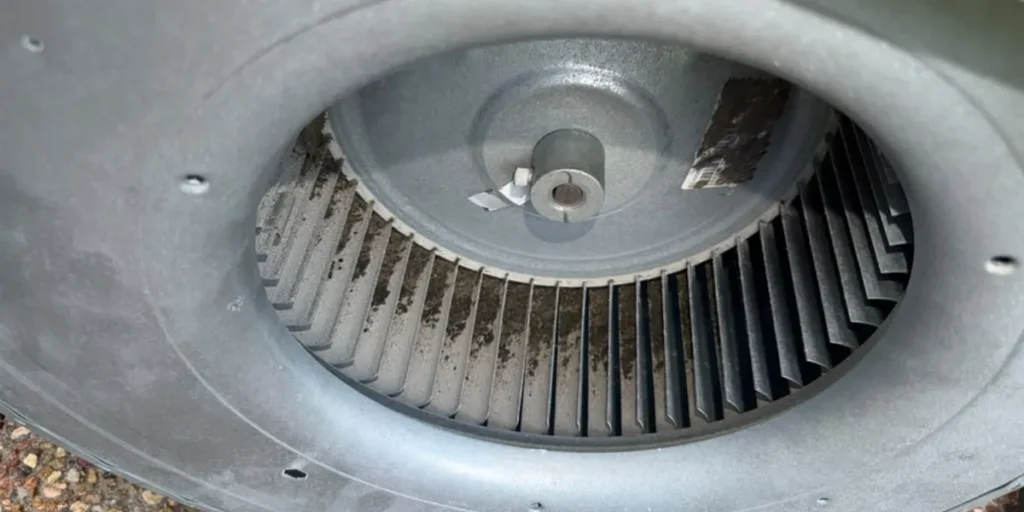
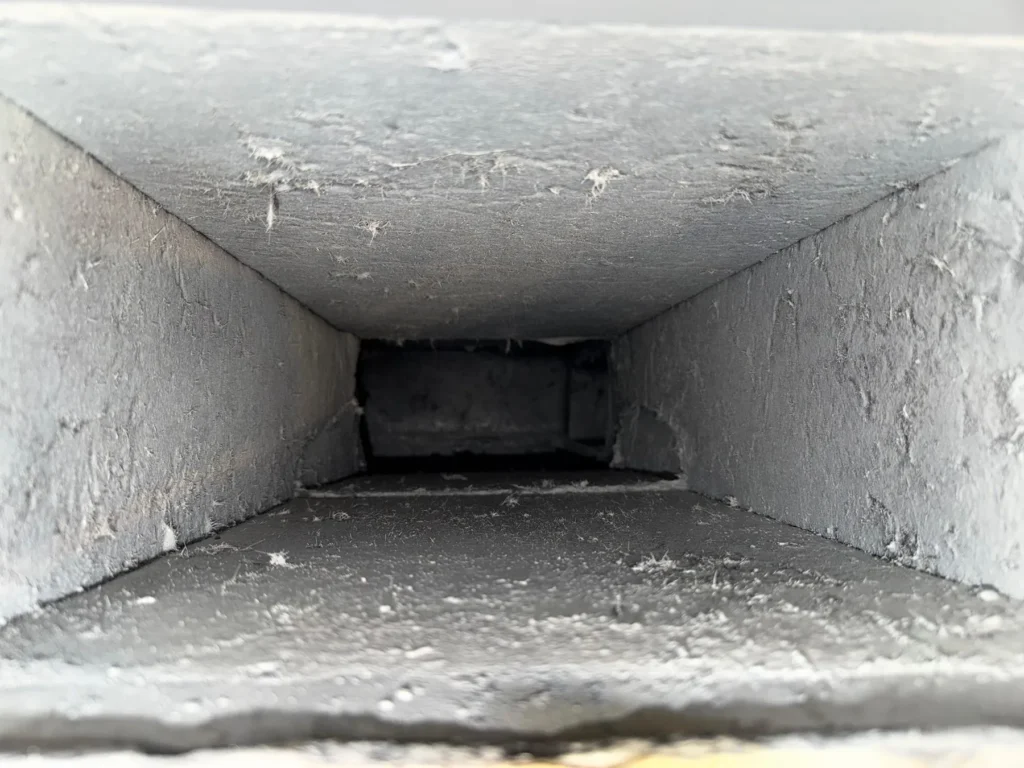
- You want the whole system, not just the openings, cleaned.
A professional cleaning follows NADCA standards and covers the supply and return runs agreed in the scope. Read what professional cleaning includes and what affects the cost.