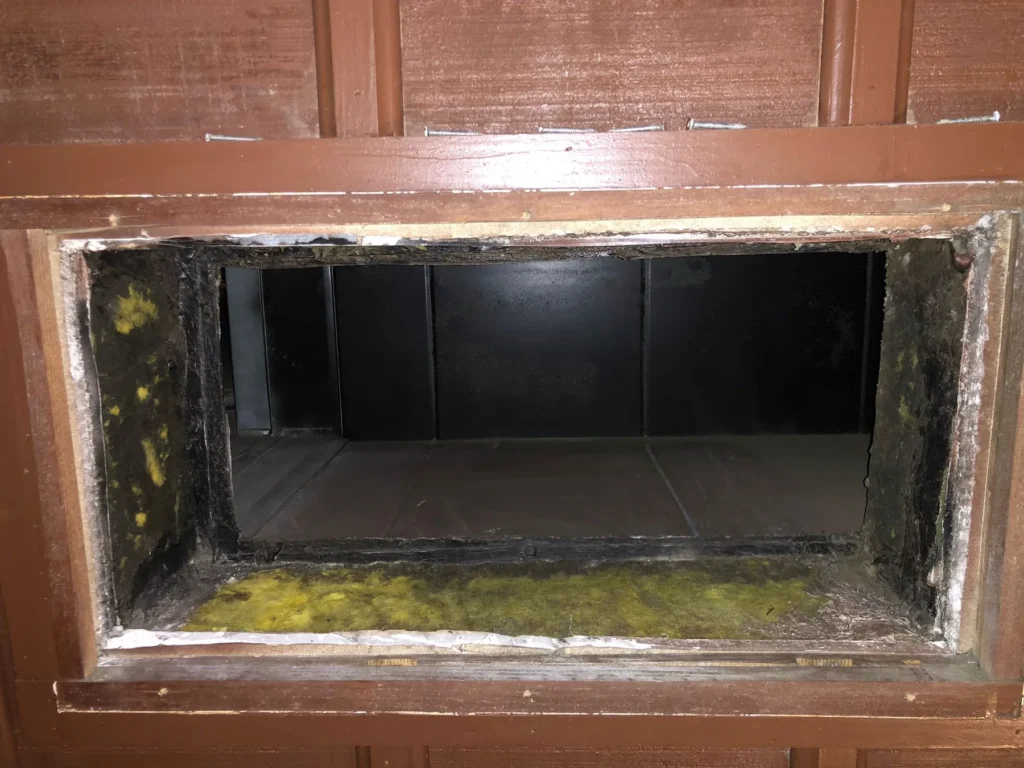
How mold gets into HVAC systems
Mold needs moisture and something to grow on. In an HVAC system, moisture can come from condensation on cold surfaces, a blocked condensate drain, a leak, or humid air entering through gaps in the ductwork. Dust inside the system provides the nutrients.
The EPA’s guide to mold and moisture says water-damaged areas and items should be dried within 24–48 hours to prevent mold growth. That gives a sense of how quickly a moisture problem can turn into a mold problem.
Signs worth investigating
- A musty smell when the system starts.
- Dark spots on registers, grilles or the surrounding ceiling.
- Visible moisture, rust or water stains near the air handler or on duct runs.
- Condensation dripping from a register.
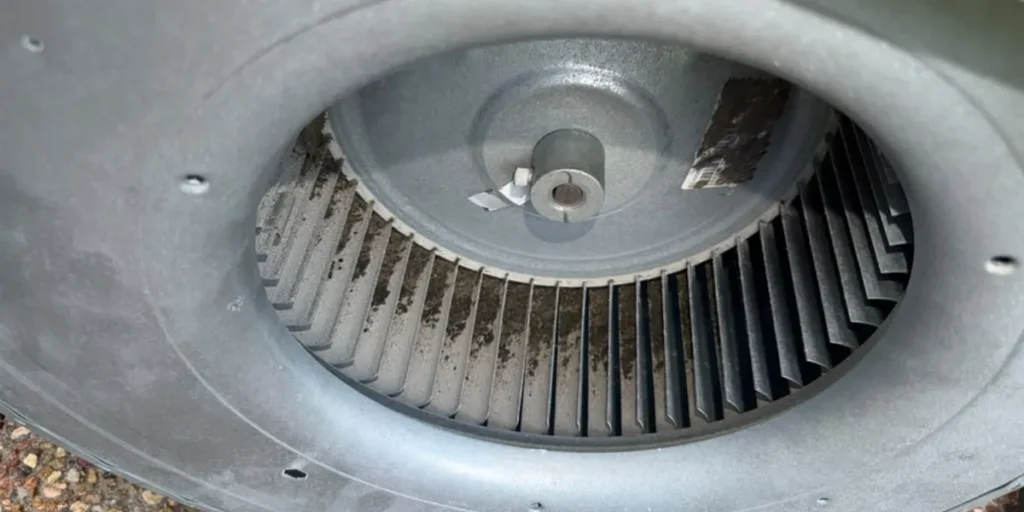
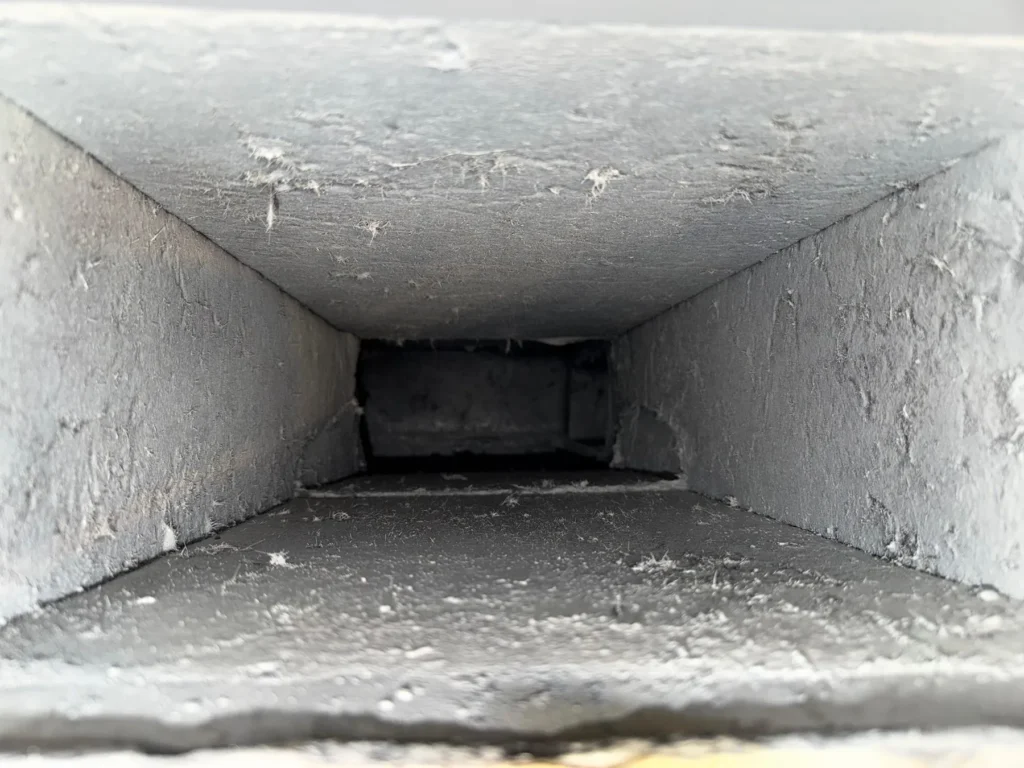
These signs justify a closer look, but they do not prove that mold is present. Dark spots on a grille can be dust that has stuck to condensation. The EPA notes that many parts of an HVAC system are not accessible for visual inspection, and that only lab analysis can confirm whether a substance is mold.
What to do if mold is confirmed
1. Fix the moisture first
Cleaning without fixing the water source means the growth is likely to return. Common causes include a clogged condensate line, poorly insulated ducts that sweat, leaks and an oversized or poorly adjusted system that does not remove enough humidity.
2. Match the treatment to the material
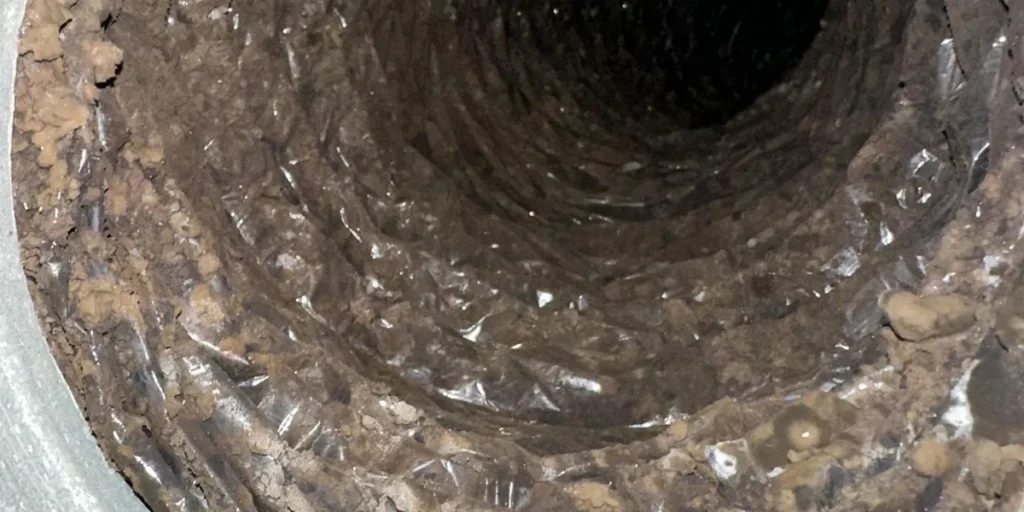
Hard surfaces such as sheet-metal ducts can be cleaned. EPA guidance on moisture in HVAC systems explains that wet or moldy internal duct insulation should be replaced. Ask the provider which materials are affected and how each will be handled.
3. Ask about chemical treatments
Some providers offer biocides or sealants. The EPA advises understanding their purpose and possible effects before agreeing to them, and notes they should only be applied after the system has been properly cleaned. Ask for product details in writing.
Health questions
If someone in the household has symptoms that may be related to mold, talk to a healthcare professional. The EPA states that duct cleaning has not been shown to prevent health problems, so it should not be presented as a medical treatment.
Choosing a provider
Ask how the suspected growth will be assessed, what caused the moisture and what the written scope covers. A good provider separates what it can confirm from what it suspects. Our guide to signs your ducts need cleaning covers the inspection itself.